
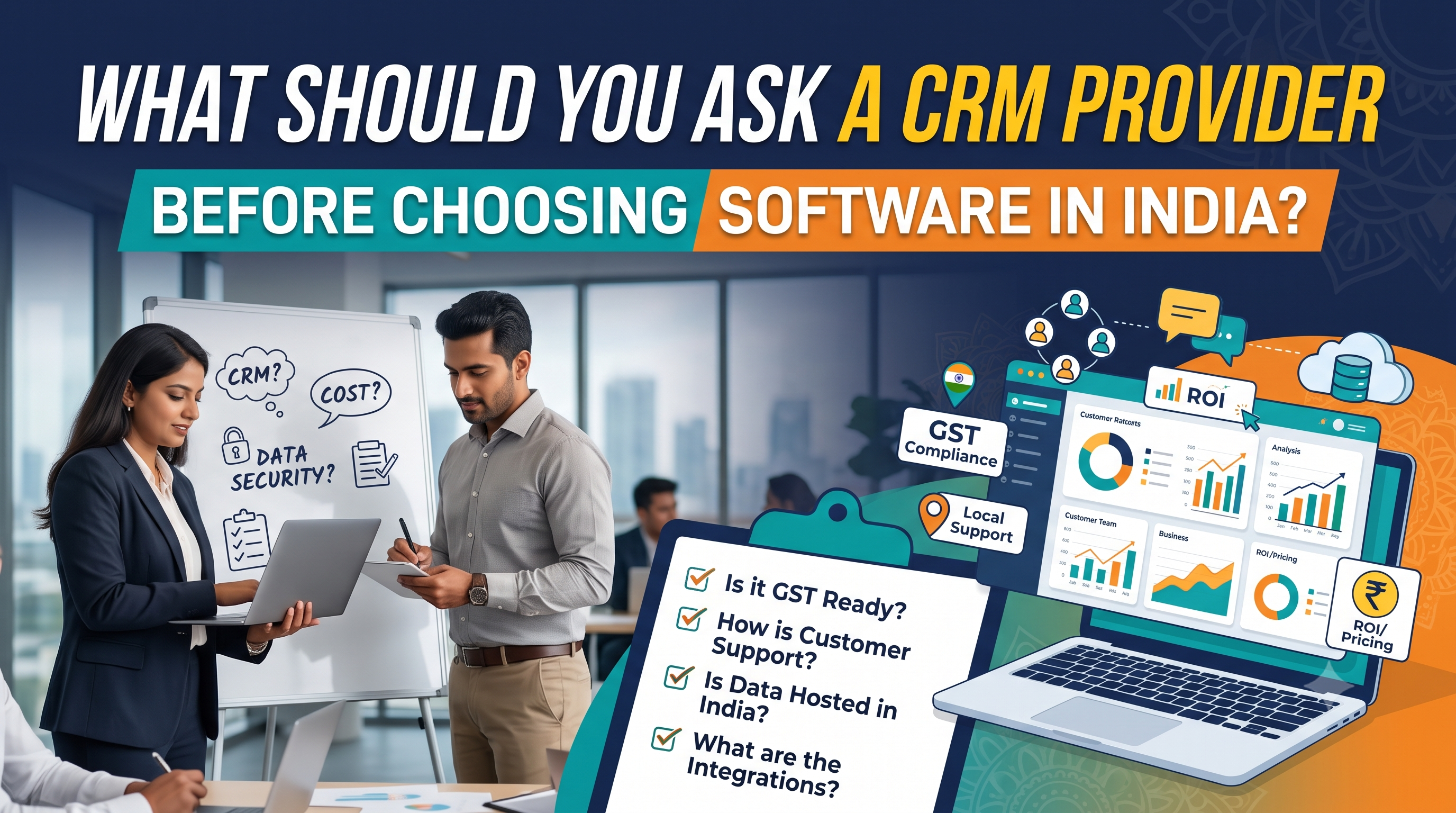
Quick answer: Before choosing CRM software in India, ask the provider seven groups of questions: industry fit, total cost in rupees, data security and DPDP Act compliance, WhatsApp and integrations, implementation and data migration, support and training, and contract and exit terms. Insist on a live demo of your own workflow, written answers, and references from Indian businesses of your size.
Most CRM purchases in India go wrong in the same way. The demo looks polished, the price looks fair, and the team signs up. Three months later the sales team is still using Excel, WhatsApp messages sit outside the system, and nobody is sure where the customer data actually lives.
The fix is not a better feature list. The fix is a better set of questions. This guide gives you 35 specific questions to ask any CRM provider, explains what a good answer sounds like, and shows which red flags should end the conversation. It is written for Indian owners and operations heads, with extra examples for abroad education consultancies, where long student journeys make a wrong CRM choice expensive.
Why Should You Ask a CRM Provider Questions Before Choosing Software in India?
You should ask questions because a CRM is not a tool you buy and forget. It becomes the memory of your business. Every enquiry, follow-up, document and payment note ends up inside it, and moving out later is slow and painful.
Vendors also have a natural reason to show only strengths. A provider will rarely volunteer that WhatsApp messages cost extra, that migration is a separate project, or that support is only available on email. Direct questions pull those facts out before you sign instead of after.
Buyer behaviour supports this. Capterra’s 2026 Tech Trends Survey found that 61% of successful software adopters engaged with three shortlisted vendors through demos or trials before deciding, compared with 41% of disappointed buyers. Comparing a few vendors on the same questions is the single habit that separates good purchases from regrettable ones.
India adds its own layers. You need pricing in rupees with GST clearly shown, support in Indian time zones, WhatsApp as a primary channel, and data handling that fits the Digital Personal Data Protection Act. If your business sells overseas education, you also deal with multi-country applications, visa stages and sub-agents, which generic CRMs rarely handle well. If you are still weighing whether you need a CRM at all, read why abroad education consultants in India need CRM software first, then return here to build your vendor shortlist.
How Should You Prepare Before Calling a CRM Vendor?
Preparation decides how useful the vendor call will be. Spend an hour on these four steps before you book any demo.
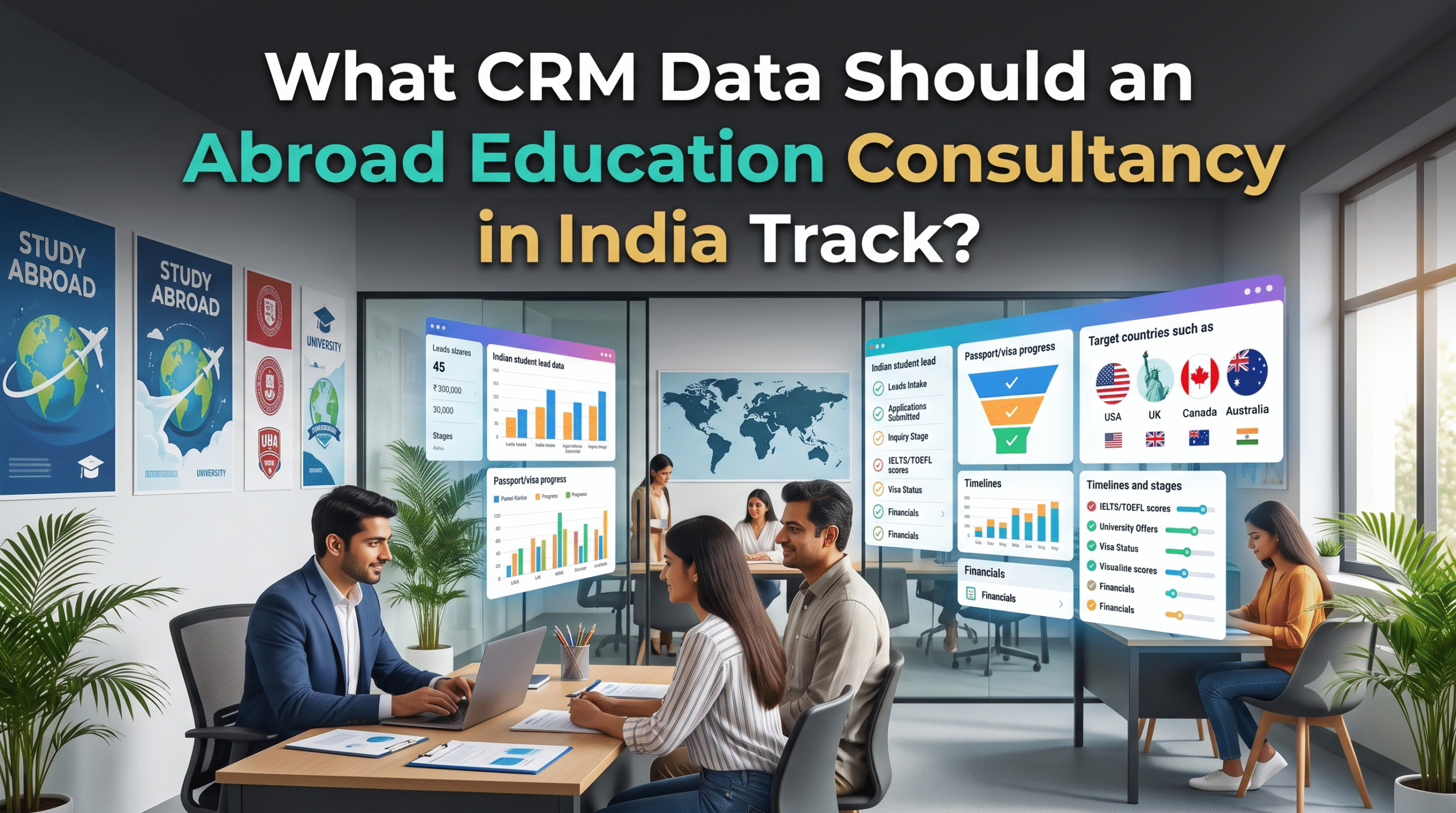
Map your real workflow. Write down every stage a lead passes through, from first enquiry to payment or enrolment. For a study abroad business that usually means enquiry, counselling, profile evaluation, shortlisting, application, offer, visa and pre-departure. If you are unsure which fields to capture at each stage, see what CRM data an abroad education consultancy in India should track.
List your must-haves and nice-to-haves. Must-haves are things your team cannot work without, such as WhatsApp integration or role-based access. Nice-to-haves are everything else. This stops a flashy dashboard from outweighing a missing core feature.
Set a total budget, not a price per user. Include setup, migration, training, WhatsApp charges and the second-year renewal.
Choose three vendors, not ten. Three is enough to compare and few enough to evaluate properly. Send the same written questions to all three so the answers are comparable. Use your own enquiry sources too: ask how each tool would manage student enquiries from your ads, website and walk-ins.
What Industry Fit and Product Questions Should You Ask a CRM Provider?
Industry fit tells you whether the vendor understands your business or will make you adapt to theirs. These questions separate specialists from generalists.
1. How many of your current Indian customers are in my industry and of my size? Ask for a number, not a logo wall. A vendor with many education consultancies will already have pipelines, document checklists and intake logic built. Listen for specifics, not general statements about serving “all industries”.
2. Can you demo my workflow instead of your standard script? Give the vendor a real scenario before the call, such as an Instagram enquiry that moves to counselling, shortlisting and an application. A confident provider will build it live. A vendor who insists on the default demo may not be able to configure it.
3. Which features are built in, and which are paid add-ons or custom work? Ask for the answer in a table. Pay attention to reporting. A good system gives you CRM reports and dashboards for lead sources, counsellor performance and conversion without exporting to Excel.
4. How does the CRM handle multi-country, multi-intake and multi-university applications? This question matters most for overseas education. One student may apply to five universities across three countries. Look for application management that tracks each application separately, plus a searchable university course finder so counsellors stop hunting through brochures.
5. How do you manage sub-agents, branches and team roles? If you work with partners or run several offices, you need clear ownership of every lead. Good sub-agent management shows who owns which student, what commission applies and what each partner can see.
For a deeper feature checklist, compare your answers against the CRM features that matter most for education consultants in India.
What Pricing and Total Cost Questions Should You Ask a CRM Provider?
CRM software pricing in India rarely stops at the number on the pricing page. These questions expose the full cost of ownership.
6. What is the price per user per month in rupees, and exactly what does it include? Ask whether the quote includes GST, and whether the price is monthly or locked to an annual plan. Compare it against the public SmartX CRM pricing page to see how transparent each vendor is.
7. Which costs sit outside the subscription? Common extras are setup fees, data migration, training, custom fields, API usage, extra storage and WhatsApp message charges. Ask the vendor to list every one. For a worked example of how these add up, read how much CRM implementation actually costs for a counselling team.
8. How does the price change when my team or lead volume grows? Some vendors charge by user, others by contacts, others by modules. A cheap starting price can become expensive at 25 users. Ask for a written quote at your current size and at double that size.
9. What was your last price increase, and what does renewal cost? Vendors do raise prices over time. A confident provider will tell you the date and size of the last increase and will put the renewal rate in the contract.
10. Can I run a trial or paid pilot before committing for a year? A trial with your own data and a real counsellor is worth more than any demo. You can start a free demo of SmartX CRM to see how a pilot feels before any commitment.
What Data Security and DPDP Act Questions Should You Ask a CRM Provider?
Security is where vague answers are most dangerous. Your CRM holds names, phone numbers, passport details, academic records and payment notes. Under India’s Digital Personal Data Protection Act, you are the data fiduciary and the CRM vendor is typically your data processor, so the accountability stays with you even though the vendor stores the data.
The DPDP Rules were notified in November 2025, and obligations are being phased in over roughly 18 months, with the main data fiduciary duties arriving by May 2027. Buying a compliant system now is far cheaper than retrofitting later.
11. Where is my data stored, and who can access it? Ask for the hosting provider, the region and the list of vendor staff roles that can view customer data. Vague answers like “secure cloud” are not enough.
12. How does your product support DPDP Act compliance? Look for consent capture, purpose tracking, correction and erasure workflows, and a signed data processing agreement. Our guide to education consultancy CRM data security walks through what to verify.
13. What access controls and audit logs does the CRM provide? You should be able to limit who can view, edit and export records, and to see who did what and when. This protects you when a counsellor leaves with student contact lists.
14. How are encryption, backups and breach notification handled? Ask about encryption in transit and at rest, backup frequency, recovery time and how quickly you would be told about an incident. Hesitation here is a serious warning sign.
15. Can I export or delete all my data whenever I choose? You need a clean way to honour a student’s erasure request and to leave the platform with your data intact. Ask for the export format and whether it is free.
What WhatsApp, Email and Integration Questions Should You Ask a CRM Provider?
In India, the conversation happens on WhatsApp. If your CRM cannot see those conversations, your records are incomplete from day one.
16. Do you support the official WhatsApp Business API, and how are messages billed? Unofficial setups can get numbers blocked. Ask whether messaging is built in, who pays Meta conversation charges, and whether templates and bulk campaigns are supported. See how WhatsApp automation for study abroad agents works in practice, and how WA Daddy handles campaign messaging.
17. Can leads flow in automatically from Meta ads, Google forms, website forms and portals? Manual lead entry is where leads die. Ask the vendor to show a lead arriving from a Facebook lead form and being assigned within seconds.
18. Which email, telephony, calendar and accounting tools connect natively? Request the exact list. Browse the CRM integrations page of any vendor and check that your tools appear, not just the logos of tools you will never use.
19. Do you provide open APIs and webhooks, and are they documented? Documentation quality predicts how easy later customisation will be. If the API needs a paid consultant to unlock, plan for it in your budget.
20. What happens to my automations if a third-party integration changes? Platforms such as WhatsApp and Meta update policies often. Ask who monitors these changes and how quickly they are fixed.
What Implementation and Data Migration Questions Should You Ask a CRM Provider?
Implementation is where good software meets real habits. A slow or messy rollout can kill adoption even if the product is excellent.
21. How long will implementation take, and who does the work? Get a timeline with named milestones. Be careful with promises of a fully custom setup in a few days, because corners are usually cut on testing and data checks.
22. How will you migrate my existing Excel sheets and old CRM data? Ask about duplicates, field mapping and who validates the result. If your team is still on spreadsheets, read why you need to move from Excel to a CRM and prepare clean source files before the call.
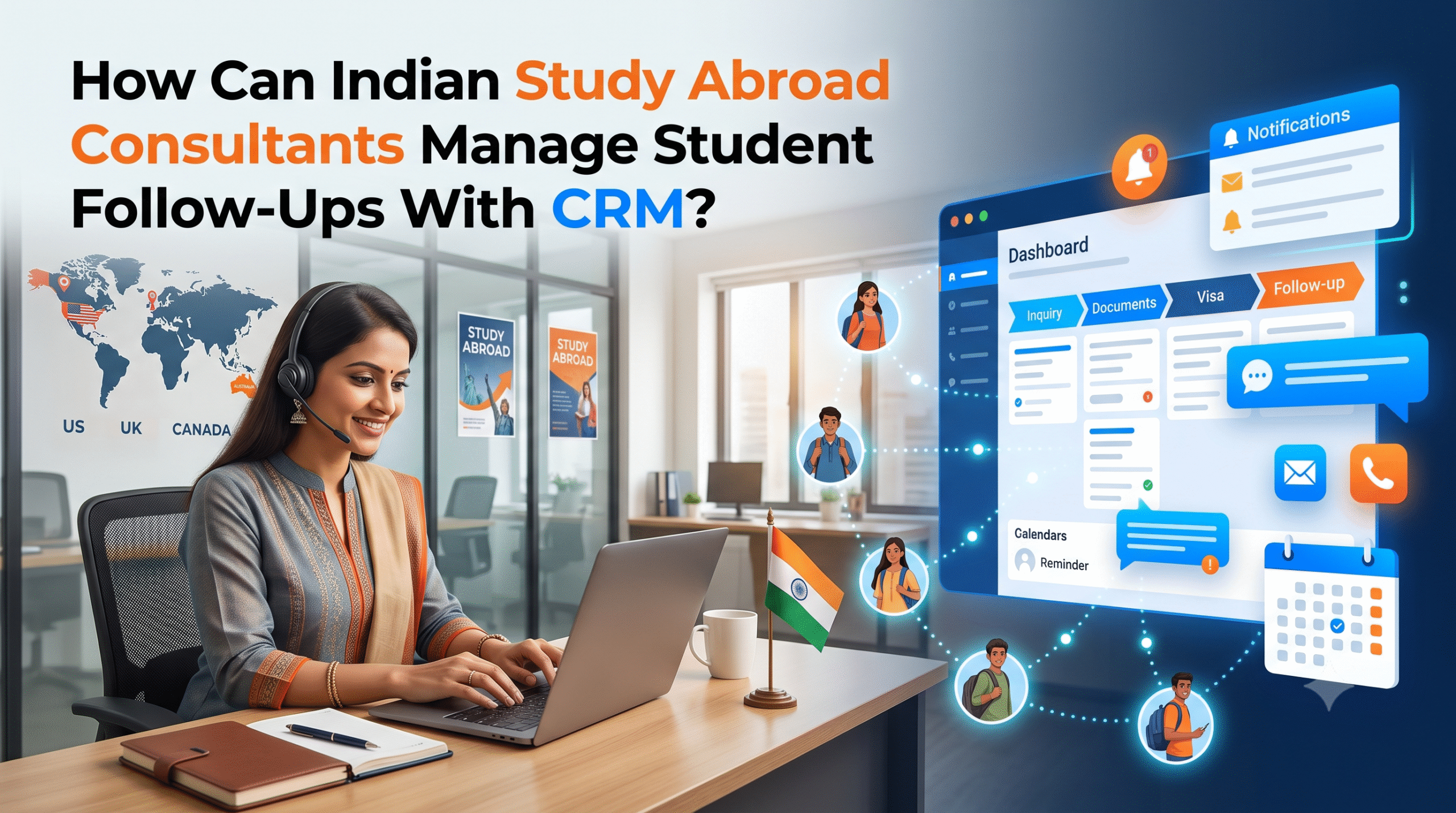
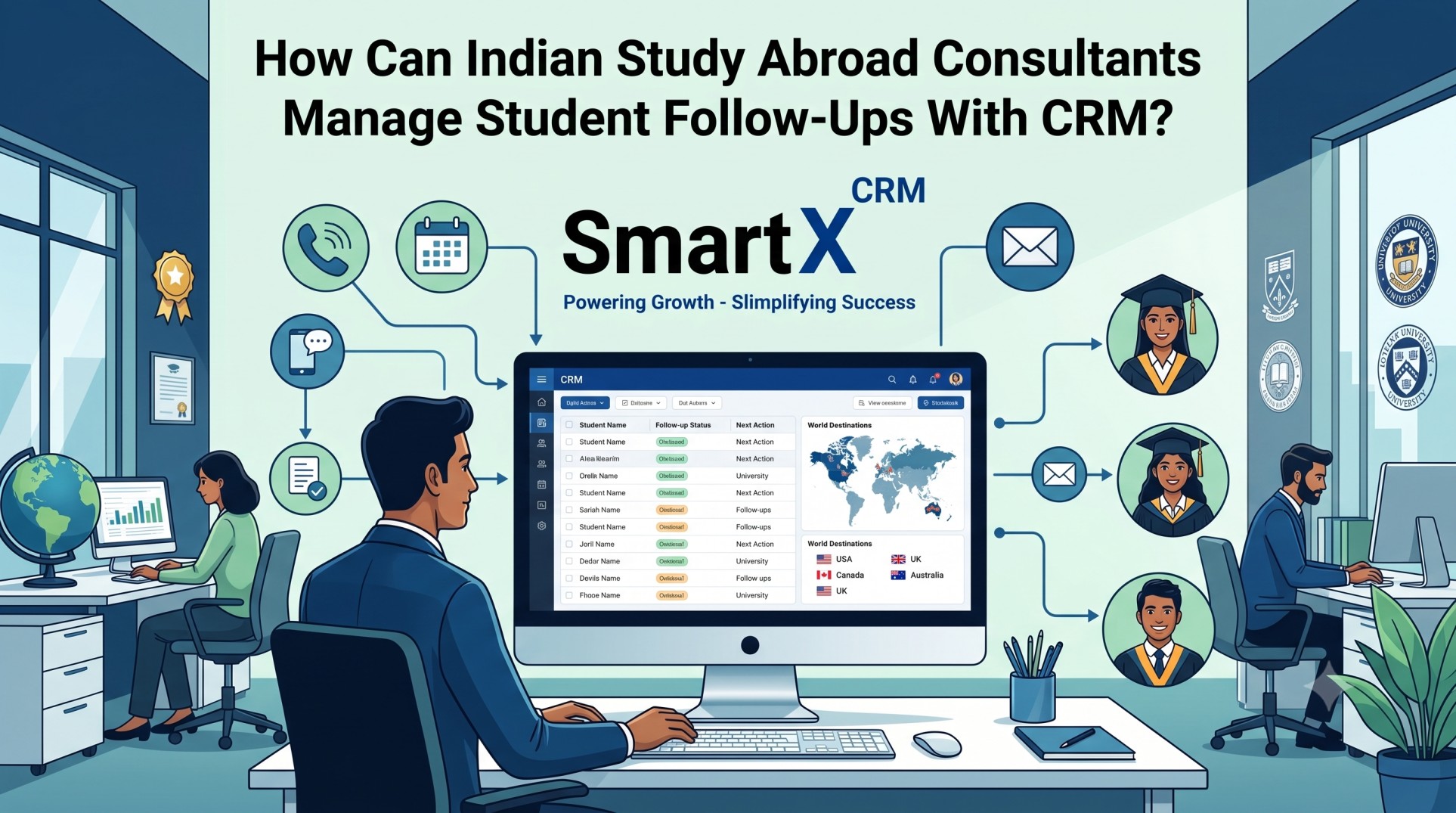
23. Can I configure pipeline stages, fields and workflows without writing code? Your process will change over time. You should be able to add a stage, rename a field or build a follow-up rule yourself. Good automation also helps you manage student follow-ups without relying on memory.
24. What does the go-live checklist look like, and which success metrics will we track? Agree on measurable targets, such as response time to new enquiries, percentage of leads with a next action, and weekly active users.
25. Can we pilot with one team or branch before rolling out to everyone? A staged rollout limits risk and gives you internal champions. A vendor who resists a pilot may be rushing you into a contract.
What Support, Training and Adoption Questions Should You Ask a CRM Provider?
Software that nobody uses has zero return. Support and training decide whether your team adopts the tool or quietly returns to Excel and personal WhatsApp chats.
26. Which support channels, hours and response times are guaranteed? Ask for support in Indian Standard Time, with phone or WhatsApp options and written response targets. Check the vendor’s published page on support and training and compare it with what the salesperson promises.
27. Is training included, and in which languages? Your counsellors may be more comfortable in Hindi, Gujarati or another regional language. Ask for recorded sessions and a knowledge base so new hires can learn without you.
28. Who is my named contact after go-live? A dedicated contact for the first 90 days makes problems visible quickly. Ask what happens if that person leaves.
29. How do you handle feature requests and product updates? Ask how often the product ships updates, how customers are told, and whether feature requests are tracked openly.
30. Can I speak to two customers in India who are similar to my business? Reference calls are the cheapest due diligence available. Ask what went wrong during onboarding and how the vendor responded.
What Contract, Scalability and Exit Questions Should You Ask a CRM Provider?
The contract is the last place to protect yourself. Read it with the same care you gave the demo.
31. What are the contract term, notice period and auto-renewal terms? Look for automatic renewals with long notice windows. Negotiate a notice period you can realistically meet.
32. What uptime and service level commitments do you offer, and what are the remedies? A promised uptime percentage means little without credits or exit rights if it is missed.
33. What happens to my data if I cancel, or if you shut down? You want a written commitment on export timelines, deletion timelines and data handover. This also supports your obligations as a data fiduciary.
34. How will the system scale as I add users, branches and countries? Ask about performance at 10 times your current lead volume, and about multi-branch permissions. If you expect to add visa management or document management later, confirm they sit in the same platform and not in a separate paid product.
35. What is on your product roadmap for AI and automation? You do not need the newest features today, but you do want a vendor that is investing steadily. Ask for examples of shipped releases from the last six months, not only future promises.
Which Red Flags Should Make You Walk Away From a CRM Provider?
Some answers should end the evaluation. Watch for these patterns:
- No written quote. If pricing is only verbal, the final bill will not match.
- Refusal to demo your workflow. It suggests the product cannot be configured as claimed.
- Vague data answers. Phrases like “everything is secure” without hosting, access or processing agreement details are a red flag.
- Pressure to sign this week. Genuine vendors give you time to run a pilot.
- No references from India. Local experience matters for WhatsApp, GST and support hours.
- Hidden messaging or migration fees. These are the most common surprises after signing.
- Features that only exist on a roadmap. If the product cannot do it today, do not pay for it today.
How Do You Score CRM Providers After the Demos?
After the calls, score each vendor on the same grid. Weights below suit most Indian service businesses. Adjust them if, for example, WhatsApp is your main sales channel.
| Category | Suggested weight | What a strong score looks like |
|---|---|---|
| Industry fit and workflow demo | 20% | Built-in stages and documents that match your process |
| Total cost and pricing clarity | 15% | Written quote with GST, renewal and add-ons listed |
| Data security and DPDP readiness | 20% | Clear hosting, access controls, processing agreement |
| WhatsApp and integrations | 15% | Official API, automatic lead capture, documented APIs |
| Implementation and migration | 10% | Defined timeline, named owner, pilot option |
| Support and training | 10% | IST support, regional language training, named contact |
| Contract and exit terms | 10% | Fair notice, SLA remedies, guaranteed data export |
Score each category from 1 to 5, multiply by the weight, and total the result. If two vendors are close, let the pilot decide. Side-by-side reviews such as the study abroad CRM comparison guide can help you cross-check your own shortlist, and head-to-head pages like SmartX CRM vs Zoho, SmartX CRM vs Kondesk and the Meritto alternative article show how the same questions apply to named platforms.
How Does SmartX CRM Answer These Questions?
You should hold SmartX CRM to the same standard as every other vendor. Here is where to verify each answer yourself.
Industry fit. Educa CRM is built for education and overseas consultancies, so pipelines, applications, visas, documents and sub-agents are part of the product, not custom projects. You can read the long-form view in our guide to the best CRM for abroad education consultancy in India.
Workflow. Counsellors can organise student applications across universities and countries, and managers can see every stage in one place.
Messaging. WhatsApp automation sits alongside the CRM so that conversations, reminders and campaigns are tied to the student record.
Pricing and trial. Plans are published on the pricing page, and you can book a demo using your own scenario before paying anything.
Buying guidance. If you want to go deeper on the decision itself, start with how to choose the right CRM for an abroad education consultancy in India and what an Indian abroad education consultancy should look for in CRM software.
Ready to test it against your own checklist? Talk to the SmartX CRM team and bring the 35 questions above.
Frequently Asked Questions About Choosing a CRM Provider in India
What are the most important questions to ask a CRM provider?
The most important questions cover total cost in rupees, data security and DPDP Act compliance, WhatsApp integration, implementation and migration support, and contract exit terms. Industry fit comes first, because a CRM built for your workflow needs far less customisation than a generic one.
How much does CRM software cost in India?
Pricing varies widely by vendor, number of users and included modules. Most providers charge per user per month, and many add setup, migration, training and WhatsApp message fees. Always ask for a written quote showing GST, add-ons and the renewal price so you can compare vendors fairly.
Does a CRM need to comply with the DPDP Act?
If you collect personal data of people in India, you are a data fiduciary and your CRM vendor typically acts as a data processor. You remain accountable, so ask for consent capture, erasure workflows, access controls and a signed data processing agreement. Phased obligations run until May 2027.
How long does CRM implementation take?
Simple setups can go live in a few weeks, while multi-branch or heavily customised projects take longer. The timeline depends on data cleanliness, number of users and integrations. A staged pilot with one team is usually safer than a full rollout on day one.
Should my CRM integrate with WhatsApp?
Yes, for most Indian businesses. WhatsApp is where leads reply and where follow-ups happen. Choose a CRM that supports the official WhatsApp Business API, ties messages to the contact record and makes message charges clear.
How many CRM vendors should I compare before buying?
Compare three. Ask each the same written questions, request a demo of your own workflow, and run a short pilot with the top two. This is enough to see real differences without wasting weeks on endless demos.
Final Thoughts: Choose a CRM Provider by the Quality of Their Answers
The right CRM provider is not the one with the longest feature list or the lowest first-year price. It is the one that answers hard questions clearly, in writing, and shows you real results with your own workflow.
Use the 35 questions above as your script. Score every vendor on the same grid, check references, and pilot before you sign. If you run an abroad education consultancy, begin your shortlist with a vendor that already understands applications, visas, sub-agents and WhatsApp, and then start a free demo of SmartX CRM to see how your questions are answered in practice.
Leave a comment: