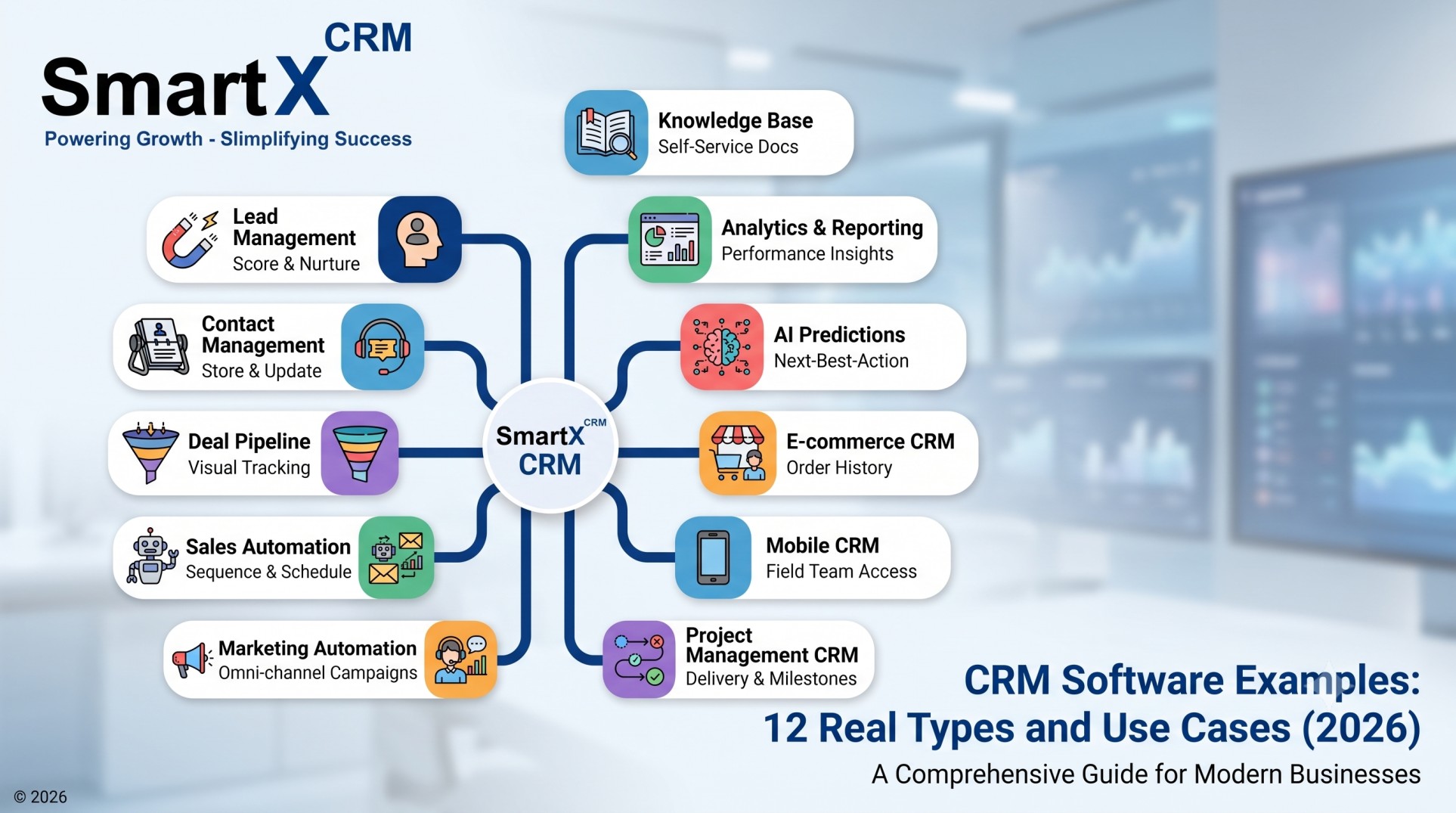
Customer Relationship Management, or CRM, software is a system that stores customer data, tracks every interaction, and automates the follow up work that sales and support teams would otherwise do by hand. If you have ever searched for CRM software examples to understand what these tools actually look like in practice, this guide breaks it down by type, by industry, and by the specific problem each example solves, including where a purpose built platform like SmartX CRM fits into the picture.
What Is CRM Software? A Quick Answer
CRM software is any platform that centralizes customer and lead information, tracks the stages of a sale or service request, and automates repetitive tasks like reminders, follow ups, and reporting. Instead of managing contacts across spreadsheets, email inboxes, and sticky notes, a business uses one CRM system as the single source of truth for every customer relationship.
Most CRM software examples fall into three broad categories:
- Operational CRM: automates day to day sales, marketing, and service tasks
- Analytical CRM: focuses on reporting, forecasting, and customer data analysis
- Collaborative CRM: shares customer information across departments and teams
Below, we walk through real CRM software examples in each category, followed by industry specific tools that show how CRM software changes shape depending on who is using it.
Types of CRM Software With Examples
1. Operational CRM Software Examples
Operational CRM tools handle the front line work of sales and support. A sales rep logging a call, a marketing team sending an automated email sequence, or a support agent tracking a ticket are all operational CRM use cases. These systems are built around pipelines, task automation, and communication logs.
A good operational CRM example centralizes lead capture from a website form, assigns that lead to a team member automatically, and reminds the rep to follow up within a set number of hours. This is the category most small and mid sized businesses start with, because it solves the immediate problem of leads falling through the cracks.
2. Analytical CRM Software Examples
Analytical CRM software is less about the day to day conversation and more about the pattern behind hundreds or thousands of conversations. These tools track conversion rates by lead source, calculate customer lifetime value, and forecast revenue based on pipeline stage. A marketing team using an analytical CRM might discover that leads from a specific campaign convert twice as often as others, and shift budget accordingly.
3. Collaborative CRM Software Examples
Collaborative CRM software connects departments that usually work in isolation. A support ticket raised by a customer becomes visible to the sales team handling their renewal. A marketing team can see which leads a sales rep closed and adjust messaging based on what worked. This category matters most for larger organizations where a customer touches multiple departments before and after a purchase.
8 Real World CRM Software Examples by Use Case
To make this concrete, here are CRM software examples grouped by the specific job each one is built to do.
4. Sales CRM Example: Pipeline and Deal Tracking
A sales focused CRM tracks every deal from first contact to closed won or closed lost. It typically includes a visual pipeline, deal value tracking, and activity logging so a sales manager can see exactly where every opportunity stands without asking the rep directly. This is one of the most common CRM software examples because nearly every business, regardless of industry, needs to track a sales pipeline in some form.
5. Marketing CRM Example: Lead Nurturing and Campaigns
A marketing CRM connects email campaigns, landing pages, and lead scoring so that a lead who downloads a guide gets automatically added to a nurture sequence. The CRM tracks opens, clicks, and website visits, then scores the lead so sales knows who is ready for a conversation and who still needs more nurturing.
6. Education and Study Abroad CRM Example: SmartX CRM
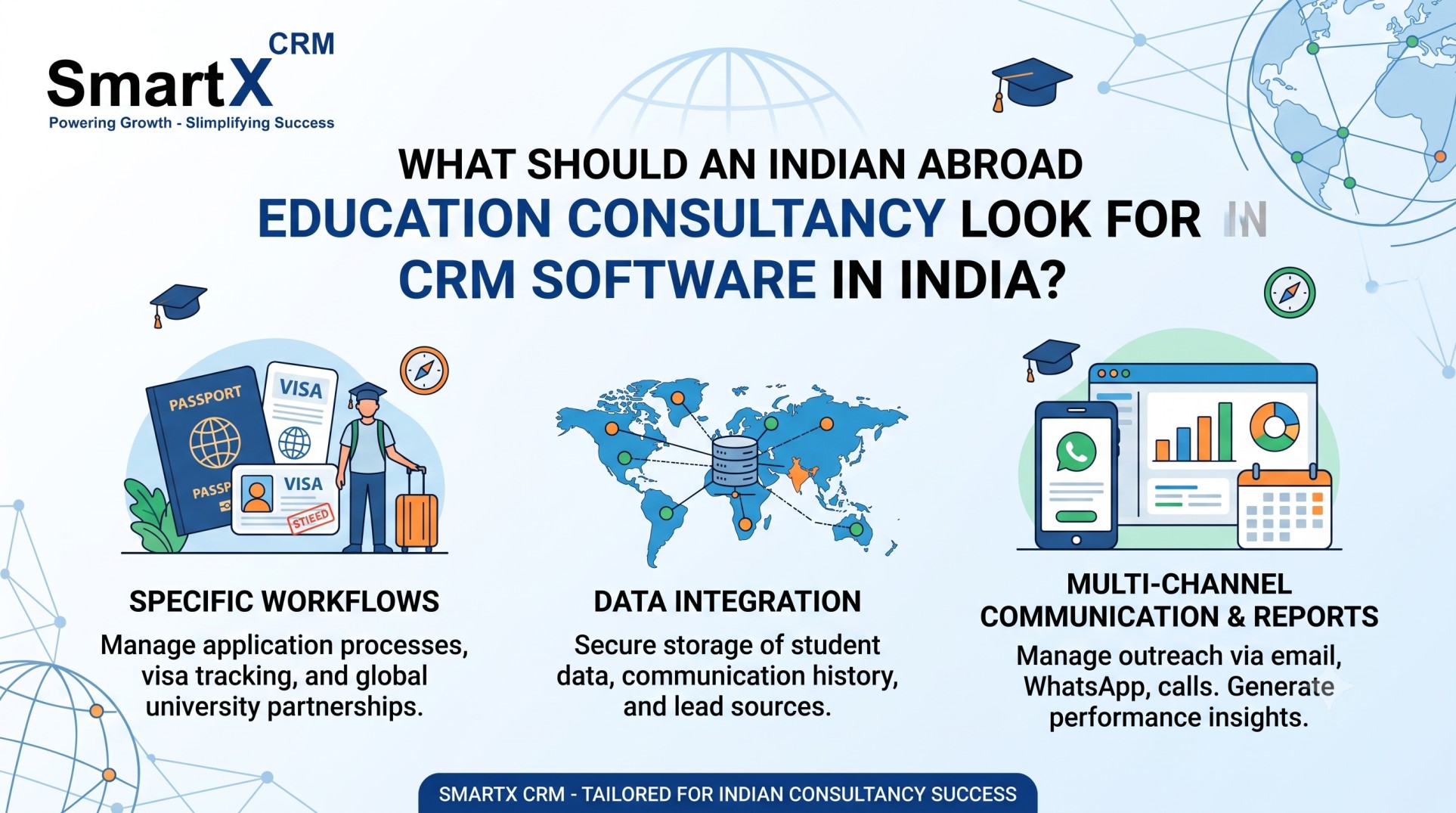
Education consultancies and overseas study counselors face a version of CRM that generic sales tools were never built for. A single student inquiry can involve dozens of touchpoints across months, including document collection, university shortlisting, visa tracking, and communication with sub agents across countries. SmartX CRM is built specifically for this workflow, with tools for lead management, application tracking, visa and document management, and WhatsApp based follow ups designed for overseas education consultants.
This is a useful CRM software example because it shows how a vertical specific platform can outperform a generic CRM once a business has workflows that a general tool cannot easily replicate, such as tracking a student across multiple university applications at once or coordinating with an education consultancy CRM built around enrollment stages rather than generic sales stages.
7. Real Estate CRM Example: Property and Buyer Matching
A real estate CRM tracks buyer preferences alongside property listings, so an agent can automatically match a new listing to interested buyers. These systems often include automated drip campaigns for leads who are not ready to buy yet, along with reminders for follow up calls after a showing.
8. Healthcare CRM Example: Patient Relationship Management
Healthcare CRM software manages patient inquiries, appointment reminders, and follow up communication while keeping data handling aligned with privacy requirements specific to the healthcare sector. A healthcare CRM example typically includes appointment scheduling integration, automated reminder messages, and a way to track a patient relationship from first inquiry through ongoing care, which is different from a typical sales pipeline because the goal is retention and care continuity rather than a single closed deal.
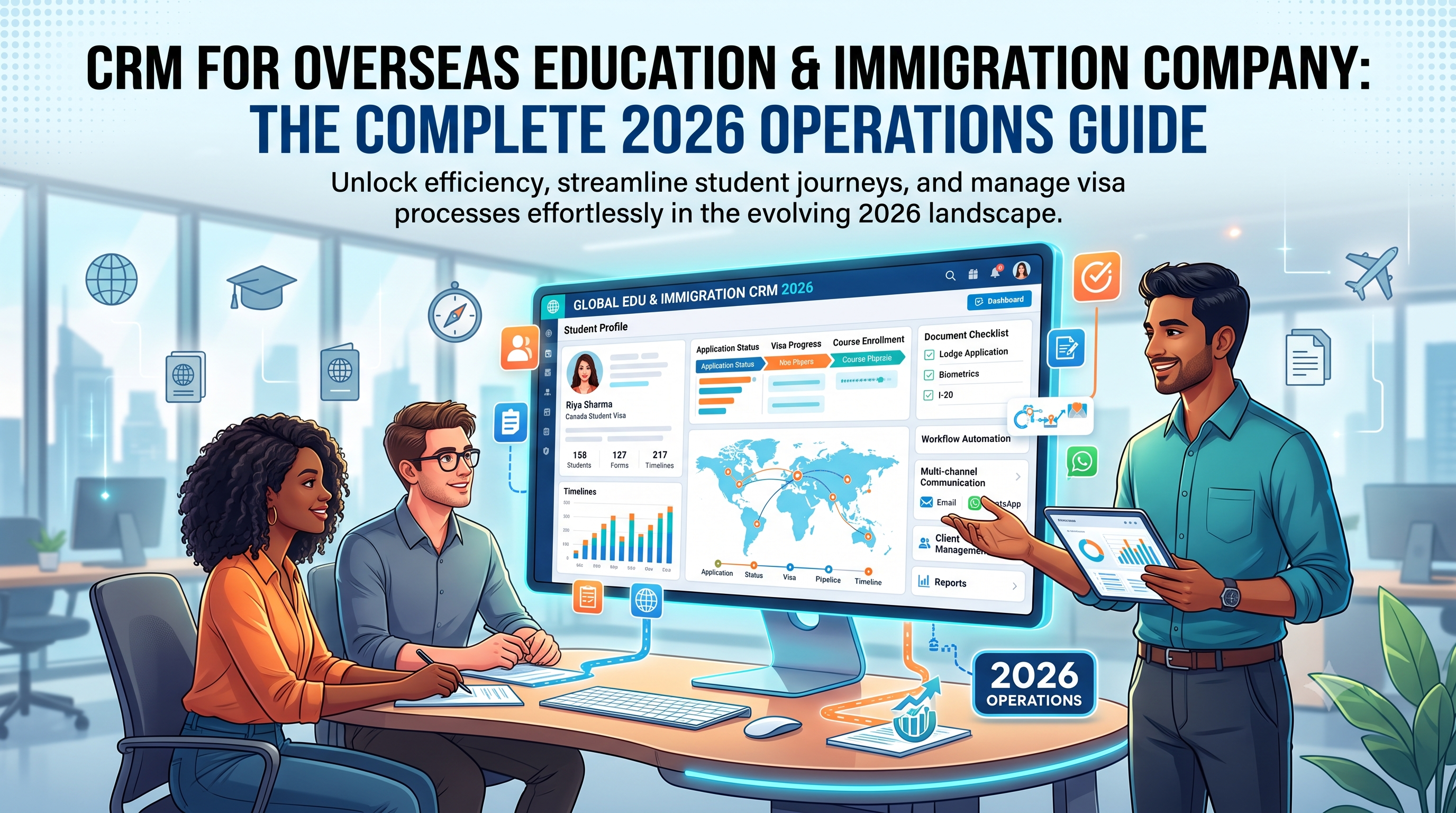
9. Immigration and Visa CRM Example: Case and Document Tracking
Immigration consultancies manage cases that can take months, with dozens of documents, deadlines, and status updates per client. A CRM built for this use case tracks each case stage, flags upcoming deadlines automatically, and stores documents against each client file. SmartX CRM’s immigration consultant tools are one example of this, built around case pipelines rather than a generic sales funnel.
10. Manufacturing CRM Example: B2B Sales Cycles
Manufacturing and B2B distribution businesses deal with long sales cycles, multiple decision makers, and quote based selling rather than a single point of purchase. A manufacturing CRM example tracks each stakeholder in a deal, stores quote history, and reminds a sales rep when a follow up is due weeks or months after an initial quote was sent.
11. Small Business CRM Example: All in One Simplicity
Small business CRM software examples prioritize simplicity over depth. Instead of dozens of modules, these tools focus on contact management, a basic pipeline, and simple automation that a small team can set up without a dedicated administrator. This category matters because many businesses abandon a CRM within months of adopting it, usually because the tool was too complex for the team size. A small business CRM example should be judged on how quickly a team can actually start using it, not just on the length of its feature list.
12. WhatsApp and Messaging Led CRM Example
A growing category of CRM software examples centers on messaging rather than email or phone calls. In markets where WhatsApp is the primary communication channel, a CRM that automates WhatsApp replies, sends bulk updates, and logs conversations against a contact record solves a very different problem than a traditional email based CRM. This is the model behind tools like SmartX CRM’s WhatsApp automation, which turns a chat thread into a trackable, assignable customer record.
Comparing These CRM Software Examples
| Category | Best For | Core Focus |
|---|---|---|
| Operational CRM | General sales and support teams | Pipeline, tasks, automation |
| Analytical CRM | Marketing and revenue teams | Reporting and forecasting |
| Collaborative CRM | Multi department organizations | Shared customer visibility |
| Education and study abroad CRM | Overseas education consultants | Applications, visas, documents |
| Real estate CRM | Agents and brokerages | Property and buyer matching |
| Healthcare CRM | Clinics and hospitals | Patient communication and retention |
| Immigration CRM | Visa and immigration consultancies | Case and document tracking |
| Manufacturing CRM | B2B distributors and manufacturers | Long cycle, multi stakeholder deals |
| Small business CRM | Small teams without dedicated admins | Simplicity and fast setup |
| Messaging led CRM | WhatsApp heavy markets | Chat based lead tracking |
How to Choose the Right CRM Software Example for Your Business
With so many CRM software examples available, the right choice depends less on which brand is most popular and more on how closely a tool matches your actual workflow. Use this checklist before deciding:
- Map your customer journey first. Write down every stage a lead or customer passes through before you look at any CRM. A generic CRM forces your process into its stages. A vertical CRM, like a study abroad or healthcare specific tool, is often already built around your actual stages.
- Count your touchpoints. If a single customer relationship involves dozens of documents, deadlines, or multi step approvals, as with education, visa, or healthcare cases, a general purpose CRM will require heavy customization. A purpose built system will not.
- Check your team’s technical comfort. A small business CRM should be usable within days, not weeks. If your team needs a dedicated CRM administrator just to keep the system updated, it may be too complex for your size.
- Confirm your primary communication channel. If most conversations happen over WhatsApp rather than email, prioritize a CRM with native messaging automation over one that treats WhatsApp as an afterthought.
- Ask about implementation cost and time. Beyond the subscription price, ask what it costs in time and money to migrate your existing contacts and train your team. This detail is often left out of pricing pages entirely.
- Test with real data, not a demo dataset. A CRM that looks clean with 20 sample leads can behave very differently with your actual volume of contacts and documents.
Frequently Asked Questions About CRM Software Examples
What is an example of CRM software? Salesforce, HubSpot, Zoho, and SmartX CRM are all examples of CRM software. Each one centralizes customer data and automates follow up tasks, but they differ in how deeply they support a specific industry workflow, such as education consultancy or healthcare.
What are the three types of CRM software? The three main types are operational CRM, which automates sales and support tasks, analytical CRM, which focuses on reporting and forecasting, and collaborative CRM, which shares customer data across departments.
What is the best CRM software example for a small business? The best CRM software example for a small business is usually one with a simple pipeline, minimal setup time, and automation that does not require technical expertise to configure, since small teams rarely have a dedicated CRM administrator.
Is SmartX CRM a good example of an industry specific CRM? Yes. SmartX CRM is a clear example of an industry specific CRM because it is built around workflows like study abroad applications, visa tracking, and WhatsApp led follow ups rather than a generic sales pipeline, which makes it a practical fit for education consultancies and immigration case management.
How is a CRM different from an Excel spreadsheet? A CRM automates follow up reminders, tracks a full history of interactions per contact, and allows multiple team members to work from the same live data, while a spreadsheet requires manual updates and offers no automation or activity tracking.
Final Thoughts on CRM Software Examples
The right CRM is not the one with the longest feature list. It is the one built around how your customers actually move through your business. General purpose examples like Salesforce and HubSpot work well for standard sales pipelines, while vertical specific platforms like SmartX CRM exist because industries like education consultancy, immigration, and healthcare have workflows that do not fit neatly into a generic sales funnel. Before choosing between any of these CRM software examples, map your own customer journey first, then match the tool to that journey rather than the other way around.
Leave a comment: