
Looking for an Outreach Partner to Scale a CRM Platform for Study Abroad Consultants
A study abroad consultancy in Ahmedabad recently told us something that comes up in almost every founder conversation we have: the software was never the hard part. Building an outreach network that actually brings in qualified sub-agents, referral partners, and university tie-ups was the part nobody had a playbook for. They had a working CRM, a small counseling team, and a decent conversion rate on the leads they already had. What they lacked was a repeatable way to bring in new outreach partners without hiring a large business development team they couldn’t yet afford.
This is a common wall for education consultancies once they move past their first 100-200 student enrollments a year. Growth stops being about counseling skill and starts being about distribution: how many agents, sub-agents, and referral partners are pushing students into your pipeline, and how well your systems support them once they arrive. If you are searching for an outreach partner to help scale a CRM platform for study abroad consultants, this guide walks through what that partnership should look like, what to check before signing anyone, and how a purpose-built CRM changes the economics of the whole arrangement.
Why Outreach Partnerships Matter More Than Ad Spend for Study Abroad Growth
Paid ads and SEO bring in individual student leads. Outreach partnerships bring in channels. A single strong sub-agent relationship in a Tier 2 city can refer 15-40 students a year without you spending a rupee on Meta or Google Ads for that region. Multiply that across 20 or 30 active partners and the math starts to look very different from a consultancy running purely on inbound leads.
The catch is that partner-driven growth only works if your back office can absorb it. A counselor juggling five spreadsheets to track which sub-agent referred which student, what commission is owed, and what visa stage each application has reached will hit a ceiling fast. This is where the outreach partner conversation and the Education Consultancy CRM conversation become the same conversation. You cannot scale partnerships on tools that were built for a single-counselor operation.
What an Outreach Partner Actually Does
An outreach partner, in the context of a study abroad or education consultancy CRM platform, is usually one of three things:
- A sub-agent network operator who recruits and manages smaller local agents on your behalf, feeding student leads into your CRM in exchange for a commission split.
- A regional business development partner who signs university tie-ups, embassy relationships, or coaching institute referral deals on your behalf in a specific city or state.
- A technology or marketing outreach partner who helps position and sell your CRM platform itself to other consultancies, if you are a software provider rather than (or in addition to) a consultancy.
Each of these needs different things from your CRM. A sub-agent network needs agent portals, commission automation, and referral tracking. A regional BD partner needs pipeline visibility and reporting they can show their own leadership. A technology reseller partner needs a platform that is easy to demo, easy to onboard new clients into, and stable enough that they are not fielding support complaints on your behalf.
The Real Problem: Most CRMs Were Not Built for Partner-Led Growth
Generic CRMs such as Zoho, HubSpot, or plain spreadsheets can technically be configured to track referrals. In practice, most consultancies that try this end up building fragile workarounds: custom fields nobody maintains, referral commissions calculated manually in Excel every month, and no clean way to give a sub-agent their own limited-access view of just their students.
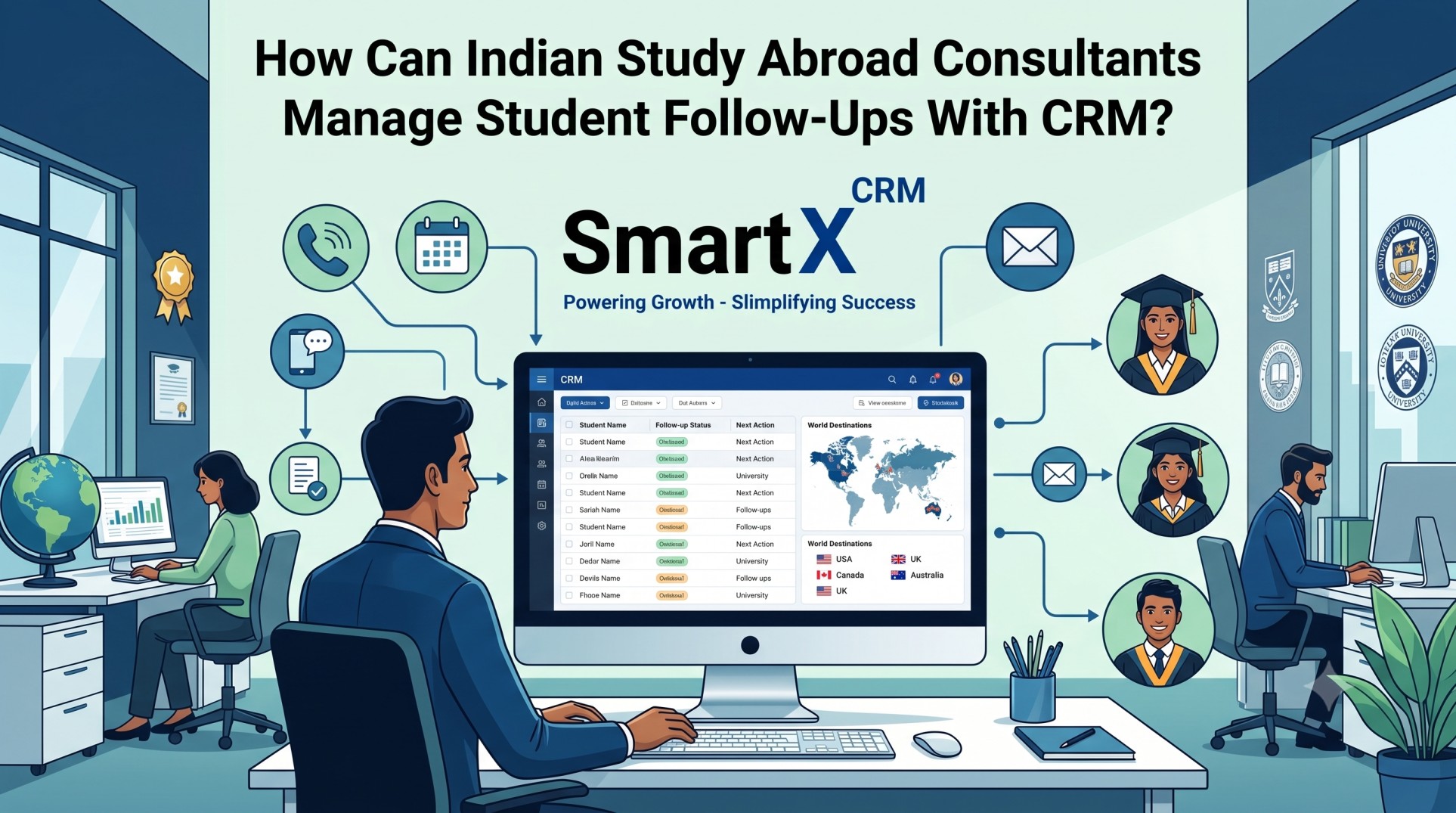
This is the exact gap SmartX CRM was built to close for education consultancies operating on partner networks. Rather than bolting referral tracking onto a generic sales CRM, the platform treats sub-agent and partner management as a core workflow, not an add-on.
Sub-Agent and Partner Management Built Into the Platform
SmartX gives every outreach partner their own portal, so a sub-agent in Rajkot or a BD partner in Pune can log in, add a lead, and track that student’s application status without ever touching your internal counselor dashboard. Commission calculations run automatically against rules you set once, which removes the monthly reconciliation headache that usually falls on a single overworked operations person. If you’re evaluating this specifically, the platform’s B2B sub-agent management module is worth a closer look before you sign any outreach partner agreement, since it shapes how much manual work that partnership will actually create for your team.
Lead Source and Attribution Clarity
When a consultancy runs five or six outreach partners simultaneously, the first thing that breaks is attribution. Which partner actually deserves credit and commission for a student who first heard about you through a coaching institute referral but converted after a WhatsApp follow-up from your in-house counselor? A CRM that tags lead source at the point of entry and preserves that tag through the entire pipeline avoids the disputes that quietly damage partner relationships. This single feature alone is often the deciding factor consultancies mention when comparing CRM Software For Study Abroad platforms.
Multi-Channel Communication Without Losing the Thread
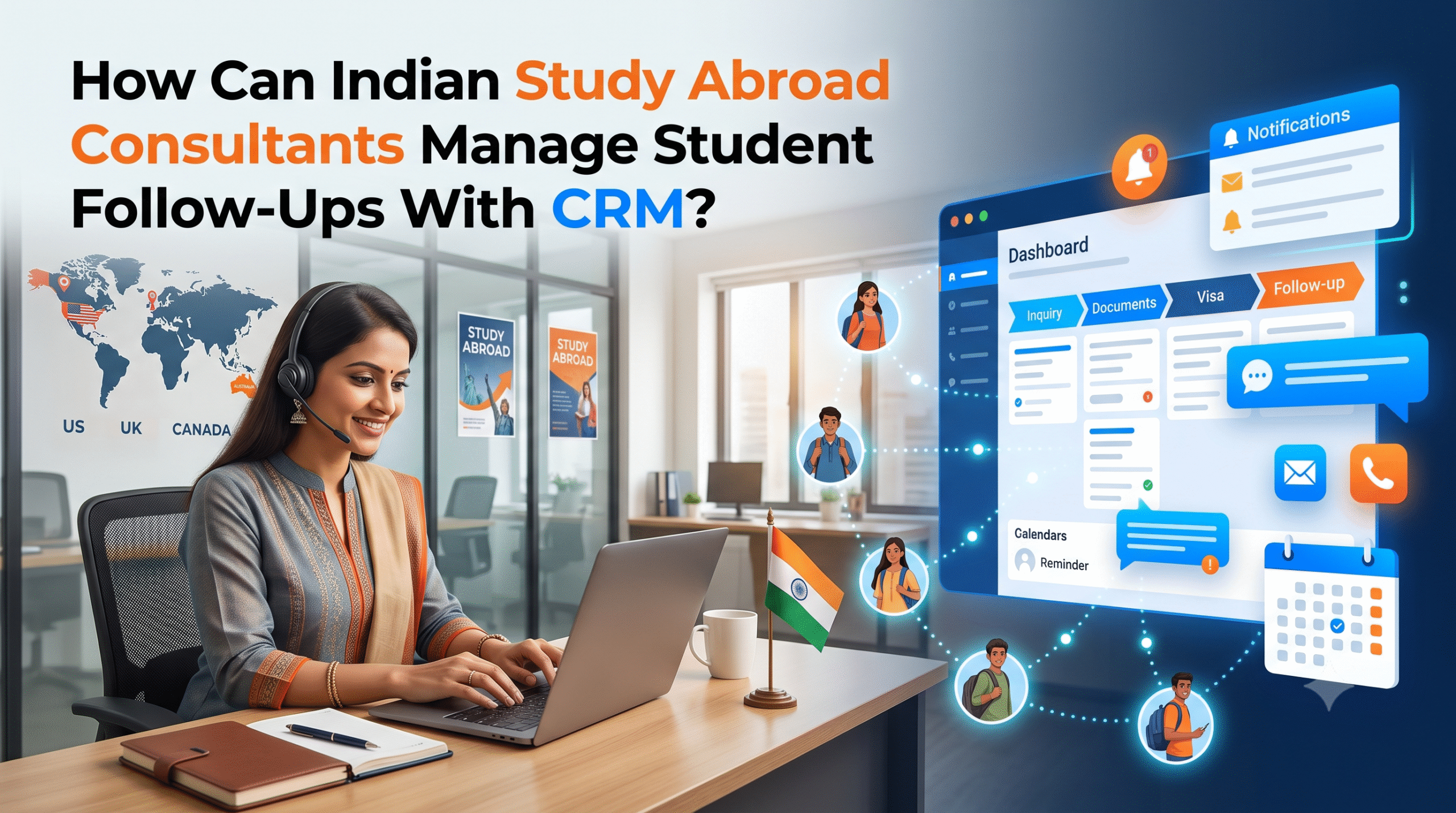
Outreach partners rarely communicate the way your internal team does. Sub-agents in smaller cities lean heavily on WhatsApp, some regional partners still prefer phone calls logged manually, and university-side contacts often work over email. A CRM that unifies these channels into one student timeline means a counselor picking up a case from a partner referral can see the full history in seconds, rather than chasing the partner for context. This is also where whatsapp automation earns its place in the stack: automated reminders, application deadline nudges, and document collection follow-ups keep students moving through the pipeline even when a busy sub-agent has moved on to the next lead.
How to Vet an Outreach Partner Before You Sign
Consultancies that get burned by outreach partnerships almost always skip the same three checks.
Check their existing student outcomes, not just their claimed network size. A partner who says they can bring “50 students a month” but cannot show you where their last batch of students actually enrolled is a red flag. Ask for university placement data from the last two intake cycles.
Confirm how they currently track and hand off leads. If a partner is still working off a personal notebook or an unshared spreadsheet, expect a rocky first few months of missing or duplicated leads until they adopt your systems, if they adopt them at all.
Clarify commission structure and payment timing in writing before the first referral arrives. Disputes over “was this student really their referral” are the single most common reason outreach partnerships collapse within the first year. A CRM with locked, timestamped lead-source attribution removes most of this friction because neither side is relying on memory or goodwill.
Ask what happens if the partnership ends. Who retains contact ownership of students referred during the partnership? This should be defined before signing, not negotiated after a dispute.
Building an Outreach Partner Program Step by Step
For consultancies starting from zero, a structured rollout beats an ad hoc approach where you sign whoever approaches you first.
Start by defining your ideal partner profile. A coaching institute with an established student base in a Tier 2 or Tier 3 city is a very different partner from a freelance education agent working solo. Decide which type fits your capacity before recruiting either.
Next, set commission tiers that scale with performance rather than a single flat rate for everyone. Partners who consistently deliver enrolled students, not just inquiries, should earn more per referral than one-off contacts. Most consultancies using SmartX set up two or three tiers: a base rate for new partners, a mid tier after the first 10 successful enrollments, and a top tier for partners who sustain volume over multiple intake cycles.
Then build the onboarding sequence for new partners. This should take under a day for a partner to complete: portal access, a short walkthrough of how to submit a lead, and a clear explanation of what information you need at first contact (student’s target country, academic background, intended intake). Partners who are confused about what to submit tend to send incomplete leads that waste counselor time.
Finally, review partner performance monthly, not annually. A partner sending five leads a month with a 60% conversion rate is more valuable than one sending twenty leads a month at 10% conversion, because the second partner is quietly consuming counselor hours without matching output. Reporting dashboards that break this down by partner, without requiring a manual export and pivot table, are one of the more underrated reasons consultancies compare Best Study Abroad CRM Software options before choosing one.
Comparing Platform Options for Partner-Driven Consultancies
If you are actively shortlisting a study abroad and education consultant crm with an outreach partner model in mind, the comparison usually comes down to a handful of practical questions rather than a long feature checklist.
Does the platform give partners a self-service portal, or does every lead have to be manually entered by your internal team on the partner’s behalf? Manual entry does not scale past three or four partners before someone on your team becomes a full-time data entry clerk.
Can commission rules be configured per partner or per tier without contacting the vendor’s support team every time you adjust a rate? Consultancies that negotiate different terms with different partner types need this flexibility built in, not requested as a custom feature.
Does the platform support regional language interfaces for partners who are more comfortable working outside English? This matters more than most founders expect once a network expands beyond metro cities.
Is there a genuine difference between how the platform handles inbound leads versus partner-referred leads, or are they dumped into the same undifferentiated pipeline? CRM Software for Overseas Education Consultants built specifically for this industry tend to separate these by default, while general-purpose CRMs require custom configuration to get there.
Consultancies weighing SmartX against broader CRM Solutions often find that industry-specific platforms save the six to twelve weeks of configuration time a generic tool typically demands before it can properly support a multi-partner referral model.
Common Mistakes Consultancies Make When Scaling Through Partners
The most frequent mistake is signing too many partners too quickly, before the CRM and internal process can support the volume. A consultancy that goes from two partners to fifteen in a single quarter, without commission automation or a clear lead-routing rule, ends up with counselors overwhelmed and partners frustrated by slow response times. Slow response to a partner-referred lead is one of the fastest ways to lose that partner’s future referrals to a competitor.
The second mistake is underpricing commissions to protect margin, which attracts low-effort partners rather than serious ones. Partners who feel underpaid tend to send you their lowest-quality leads first and reserve their best contacts for consultancies paying better rates.
The third mistake is treating the CRM as an afterthought to the partnership deal rather than a precondition for it. Signing an outreach partner before your systems can handle referral tracking, commission calculation, and multi-channel communication usually means the first few months of the partnership are spent fixing operational chaos instead of converting students.
A Realistic Timeline for Scaling Through Outreach Partners
Most consultancies that get this right follow a similar arc. The first one to two months go into setting up the CRM properly: partner portals configured, commission rules defined, and lead source tagging tested with a pilot partner before wider rollout. Months three through six typically bring in three to five active partners, during which the priority is response time and conversion quality rather than partner count. From month six onward, with systems proven, consultancies tend to expand more aggressively, often doubling their partner network in the following two quarters because the operational bottleneck has already been solved rather than being solved reactively under pressure.
This sequencing matters because it is the opposite of what many consultancies do instinctively, which is to chase partner signatures first and figure out the operational side afterward.
Where This Fits Into a Broader CRM Strategy
Outreach partnerships are one growth channel among several a consultancy typically runs alongside direct student inquiries, lead generation crm driven digital campaigns, and organic referrals from past students. None of these channels work in isolation. A CRM for study abroad and immigration consultancy that unifies all of them into a single pipeline, rather than treating partner referrals as a separate manual process, is what lets a small counseling team support double or triple the enrollment volume without a proportional increase in headcount.
For consultancies that also handle visa cases, this same infrastructure extends into deadline tracking and document management, since a partner-referred student still needs every application and visa milestone tracked with the same rigor as a direct inquiry. Tools like bulk whatsapp sender functionality and a whatsapp automation tool built into the CRM keep this communication consistent across every partner-sourced student, rather than depending on individual counselors to remember follow-ups manually.
Getting Started
If your consultancy is at the stage of actively looking for an outreach partner to help scale, the sequencing matters more than the search itself. Get your CRM configured to handle sub-agent portals, commission automation, and clean lead-source attribution first. Pilot with one serious partner before opening the door to several. Review performance monthly and adjust commission tiers based on actual enrolled outcomes, not lead volume alone.
SmartX CRM was built around exactly this workflow for Indian education consultancies managing sub-agent and partner networks across multiple regions. If you want to see how the partner portal, commission automation, and reporting dashboards work together before bringing on your next outreach partner, book a walkthrough with the SmartX team and test it against your current spreadsheet-based process.
Frequently Asked Questions
What is an outreach partner in the context of a study abroad CRM? An outreach partner is typically a sub-agent, regional business development contact, or referral partner who brings student leads into a consultancy’s pipeline in exchange for a commission, and who needs some level of access to the consultancy’s CRM to submit and track those referrals.
How much commission should I offer a sub-agent partner? Rates vary widely by region and student volume, but most Indian consultancies structure tiered commissions that increase once a partner crosses a threshold of successful enrollments, rather than paying a flat rate regardless of performance.
Can a generic CRM like Zoho handle sub-agent management for a study abroad consultancy? It can be configured to approximate this, but most consultancies find it requires significant custom setup and ongoing manual work compared to a platform built specifically for education consultancy partner networks.
How long does it take to onboard a new outreach partner onto a CRM? With a self-service partner portal, onboarding typically takes under a day. Without one, it can take a week or more of manual coordination between the partner and internal staff.
Should I let outreach partners see my full CRM pipeline? No. Partners should generally only see the students they personally referred, not your entire pipeline. This is one of the reasons partner-specific portal access matters more than general CRM access for this use case.
Leave a comment: